Quick Answer
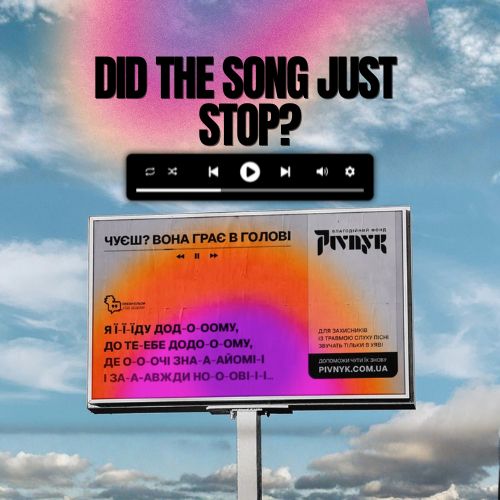
A Ukrainian campaign used interrupted radio songs and lyric-based triggers to simulate acoustic trauma and raise awareness about soldiers’ hearing loss.
It turned familiar music into mental “earworms” to show how sound can exist even without hearing.
The initiative supported awareness and fundraising for hearing rehabilitation.
Radio as an interruption of reality
Radio became one of the key platforms of the campaign. Instead of functioning as a traditional medium for music, it was reimagined as a space for disruption and reflection. Fragments of iconic Ukrainian songs were recorded and deliberately interrupted to introduce messages about acoustic trauma, mirroring the sudden way soldiers lose their hearing after explosions.
In a country affected by war, this interruption is not just a creative device, but a direct reflection of lived reality. Thousands of soldiers in Ukraine suffer from acoustic trauma caused by explosions. More than 30,000 defenders require hearing rehabilitation, while waiting times for surgery can reach up to 10 years. Hearing loss remains one of the most common yet invisible war injuries.
The mission of Pivnyk Foundation
The campaign was led by Pivnyk Foundation, a young Ukrainian charity created to bring attention to a problem that often goes unnoticed: hearing loss among soldiers. Their goal was not only to raise awareness, but also to support fundraising for hearing restoration surgeries.
The foundation approached the issue from a cultural angle, understanding that emotional connection is often more powerful than direct explanation. Instead of presenting statistics alone, the campaign translated trauma into something people could feel, even if only momentarily.
The insight behind invisible sound
At the core of the campaign was a simple but powerful insight: even without sound, music can still exist in the mind. This is possible thanks to the earworm effect, where familiar melodies are triggered internally by exposure to lyrics or fragments of text.
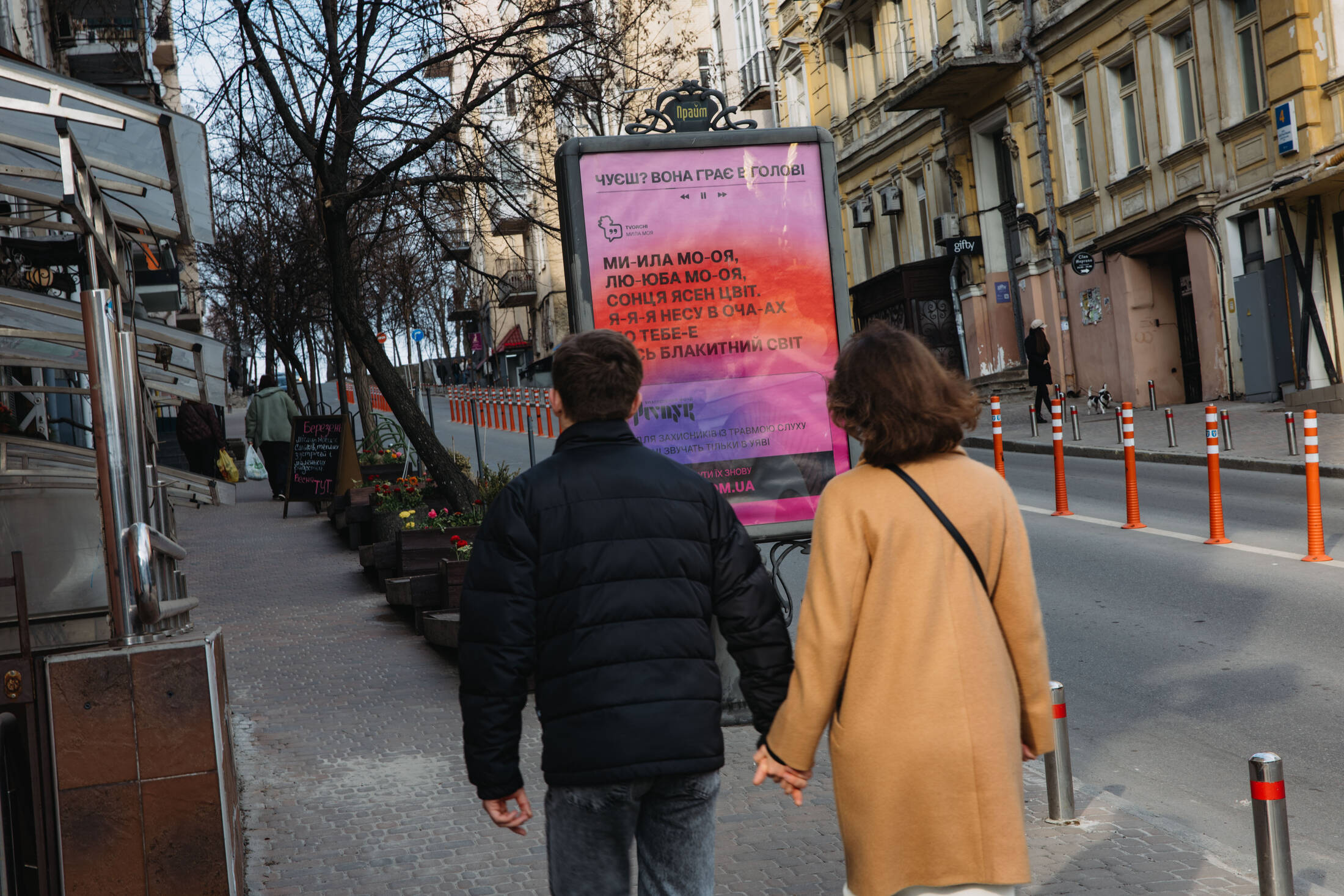
Based on this idea, the campaign used lyrics from widely recognized Ukrainian songs instead of broadcasting the songs themselves. When people read the words, the melody automatically played in their minds, transforming reading into an internal listening experience.
The message became personal and direct: “Do you hear it? It’s playing in your head.” For many soldiers experiencing hearing trauma, music no longer exists externally, but survives internally as memory.
Collective cultural participation
A total of 39 Ukrainian artists joined the initiative, allowing free use of their lyrics and actively supporting the campaign across their own platforms. Their participation transformed the project into a collective cultural movement rather than a single-brand message.
This collaboration helped expand the campaign’s reach and emotional depth. It was no longer just about awareness, but about shared responsibility between artists, institutions and audiences.
A multi-platform experience of interruption
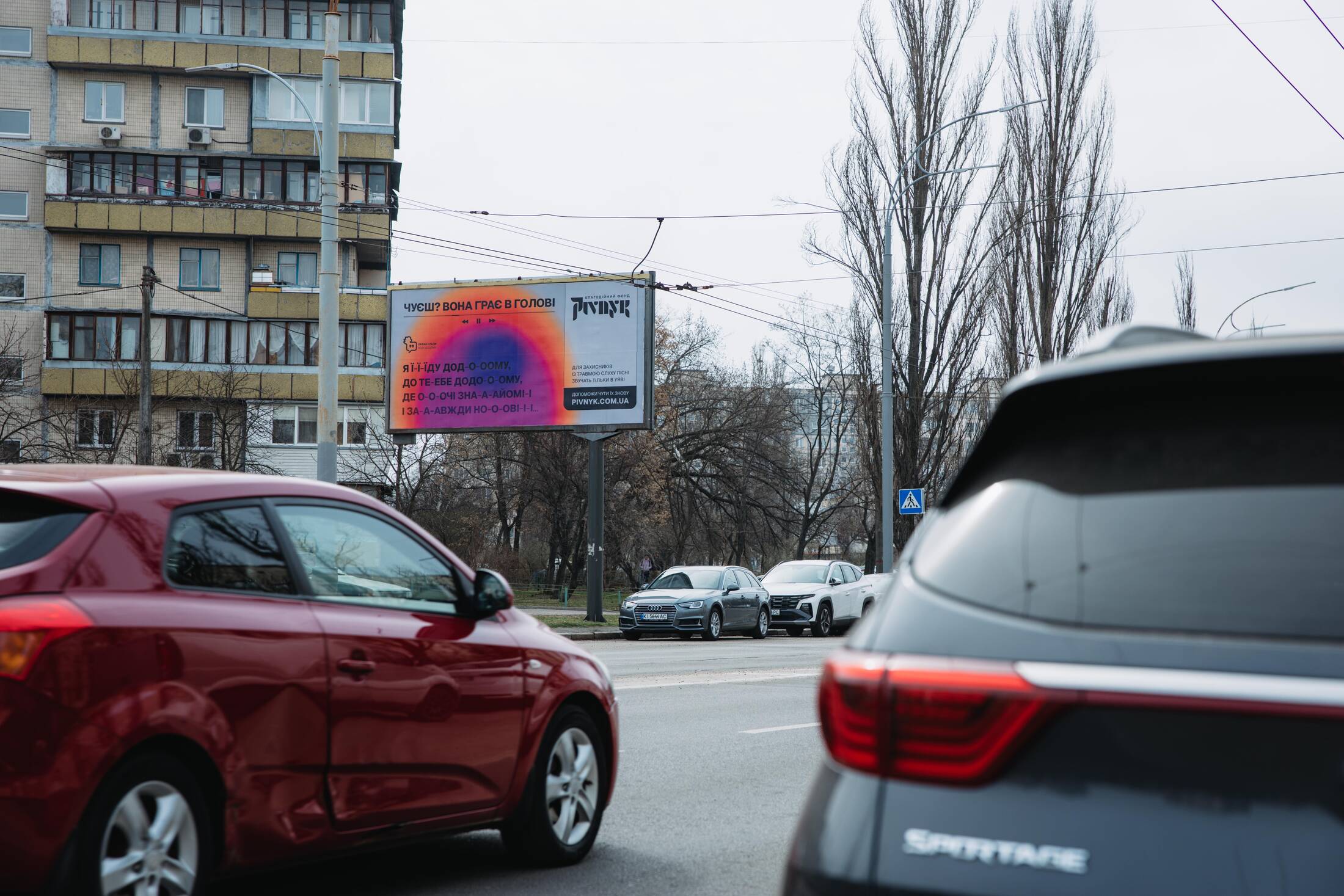
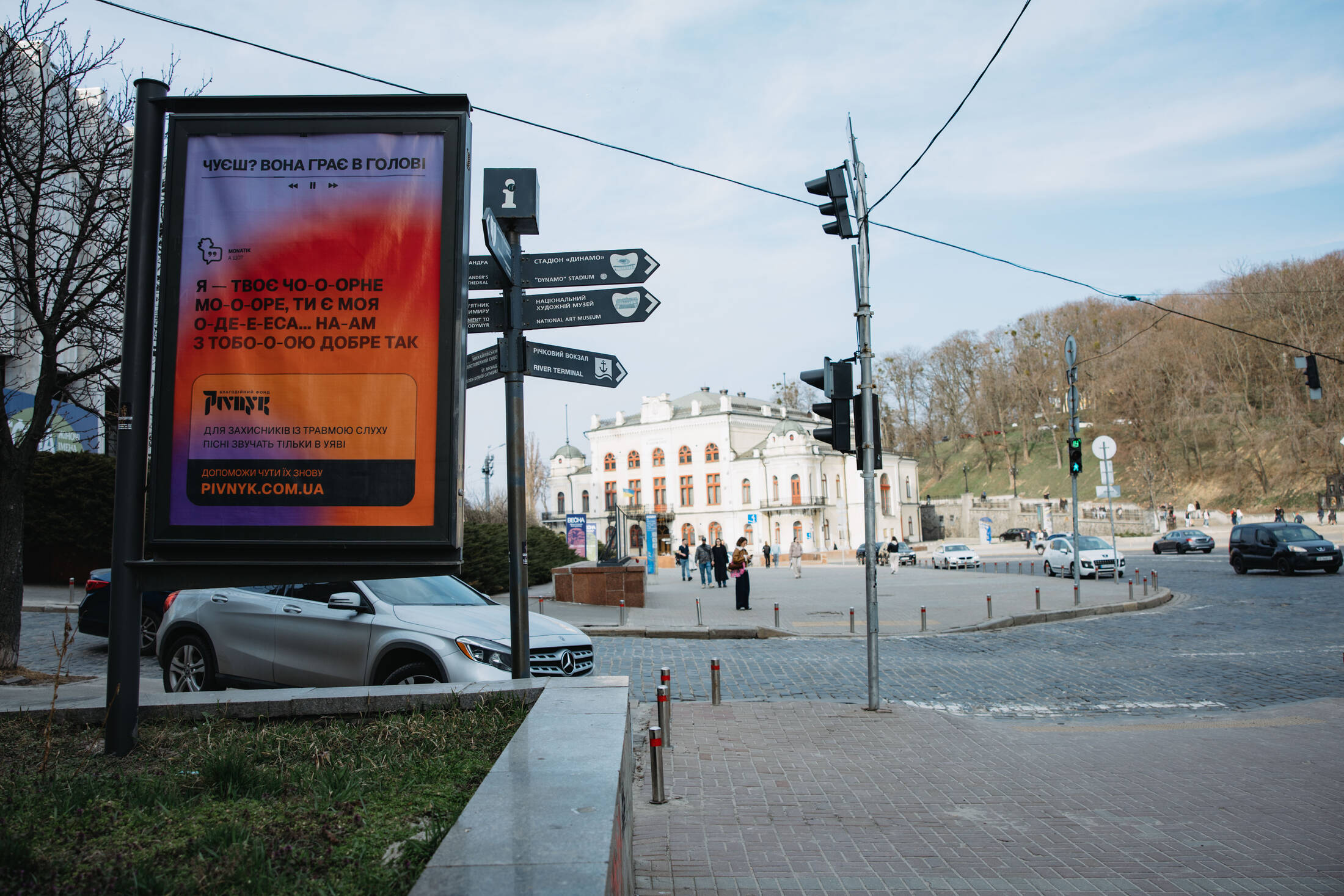
The campaign extended across outdoor media, radio, digital platforms and social media. In each environment, lyrics acted as triggers that activated familiar melodies in the minds of the audience.
Radio played a particularly important role. Iconic song fragments were deliberately interrupted mid-play, recreating the sudden and disorienting experience of hearing loss caused by explosions. This interruption became a metaphor for the fragility of sound and memory in wartime conditions.
From awareness to collective response
Supported by artists, influencers and widespread media coverage, the campaign evolved into a national conversation about hearing trauma among Ukrainian defenders. It shifted the topic from medical statistics to human experience, making the issue emotionally accessible to a wider audience.
With minimal production costs and the collective support of the music community, the initiative demonstrated how a simple idea can mobilize culture, media and public attention. By transforming lyrics into triggers and silence into meaning, the campaign showed that even invisible injuries can be made visible through creativity and shared memory.
Summary
The campaign, led by the Pivnyk Foundation, addressed the invisible consequences of war in Ukraine: acoustic trauma among soldiers.
Instead of using traditional messaging, it reworked iconic Ukrainian songs by interrupting them on radio and transforming lyrics into mental triggers.
This approach relied on the “earworm effect,” where familiar lyrics activate music in the mind even without audio playback.
39 Ukrainian artists supported the initiative by allowing free use of their lyrics, expanding its cultural impact.
The campaign ran across radio, outdoor, digital, and social platforms, turning awareness into a shared national conversation about hearing loss and rehabilitation needs.
FAQs
What was the main idea of the campaign?
It used interrupted music and lyric triggers to simulate how soldiers experience sudden hearing loss from explosions.
Why did the campaign use song lyrics instead of full songs?
Because lyrics can trigger “mental playback,” allowing people to hear music internally even without sound.
Who supported the campaign?
39 Ukrainian artists contributed by granting rights to their lyrics and sharing the message publicly.
What problem does it highlight?
Acoustic trauma and long-term hearing loss among Ukrainian soldiers caused by the war.
What made the campaign different from traditional ads?
It transformed sound into memory-based experience instead of relying on direct audio or conventional storytelling.
Craft emotive OOH that resonates
Explore high-visibility print and OOH formats that elevate brand values and recall.


















Comments
Be the first to comment.